
Strategic Buying & Merchandising Plan: GAP Fall 2025
The Ask
Develop a comprehensive buying strategy for Fall 2025 by analyzing the current fashion industry, evaluating competitors, and building a data-driven 6-month sales and assortment plan.
Team


Ella Lupo
Mirella Savee
This was a collaborative team project focused on developing a data-driven buying strategy. Responsibilities were divided across financial planning, market research, and merchandising execution.
My role was heavily centered on the financial planning process. Additionally, I assisted with vendor research and merchandise classification, ensuring that our financial strategy aligned with a realistic and competitive product assortment.
Process
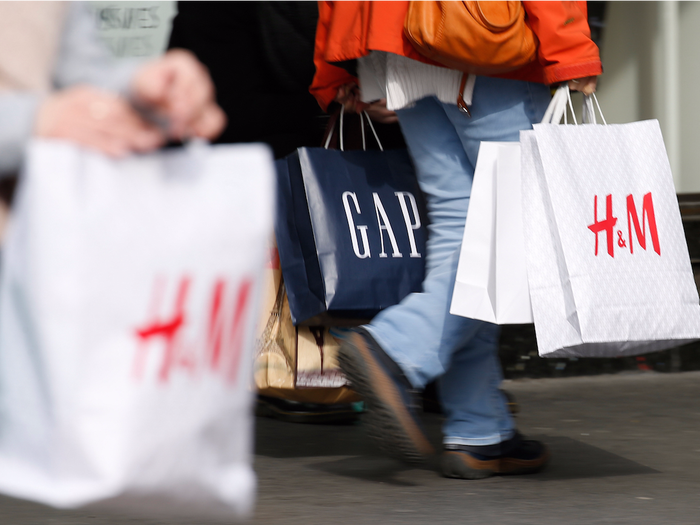
This project centered around creating a buying plan for GAP because of its current position as a mass market retailer.
Industry & Market Research
We began by analyzing the current state of the fashion industry, including economic conditions, consumer spending behavior, and seasonal trends. This informed all forecasting decisions.
Competitive & Consumer Analysis
We conducted a deep dive into:
H&M as a direct competitor (product assortment, pricing, positioning)
Gap’s target consumer, focusing on lifestyle, preferences, and purchasing behavior
This allowed us to identify opportunities for differentiation and growth.
We conducted a SWOT analysis of Gap
Strength: Strong brand recognition + reputation for quality basics
Weakness: Declining sales in a highly competitive market
Opportunity: Expanding target market through inclusive, modern advertising
Threat: Intense competition from brands offering similar products
Process
Vendor & Classification Strategy
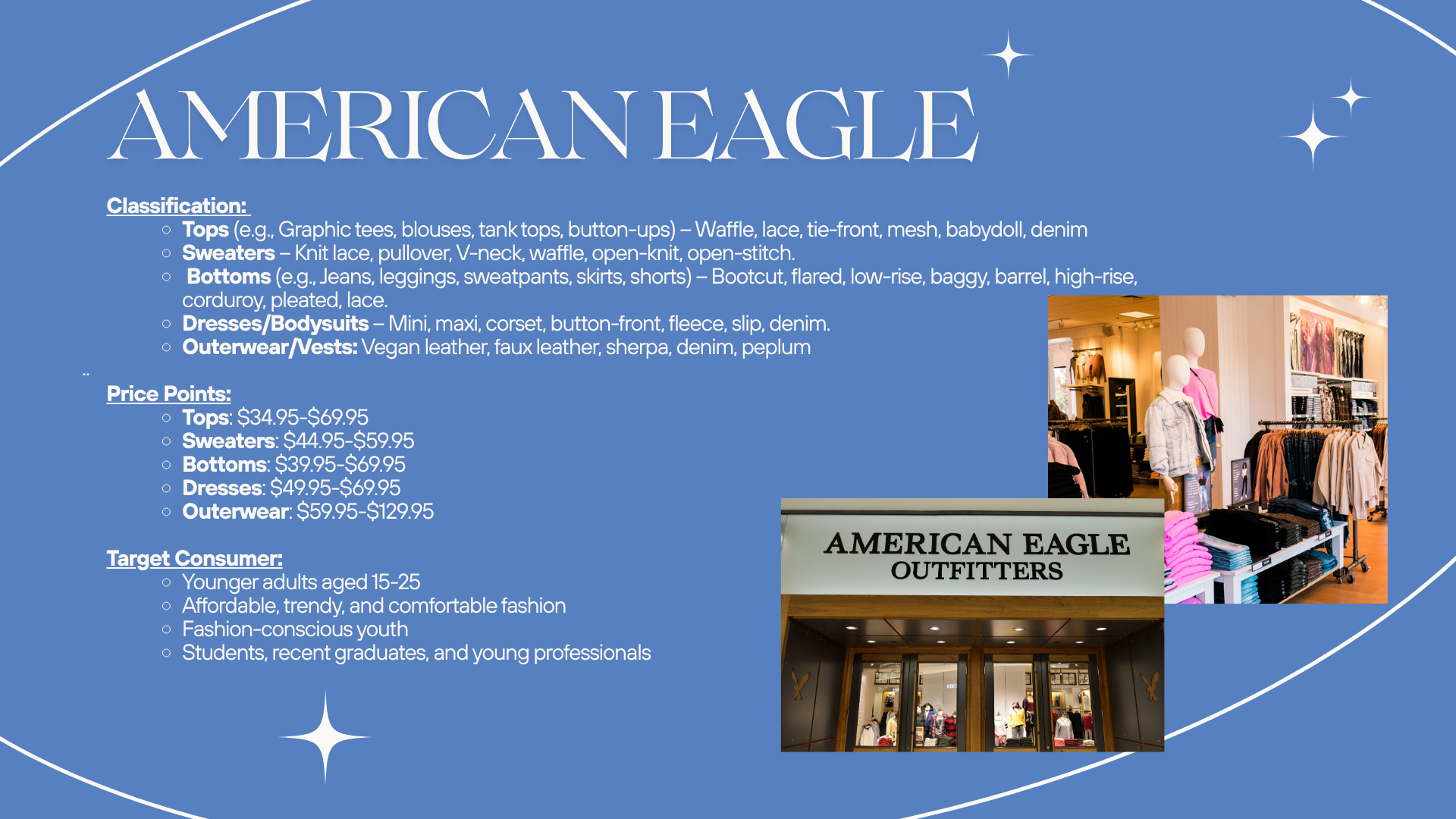
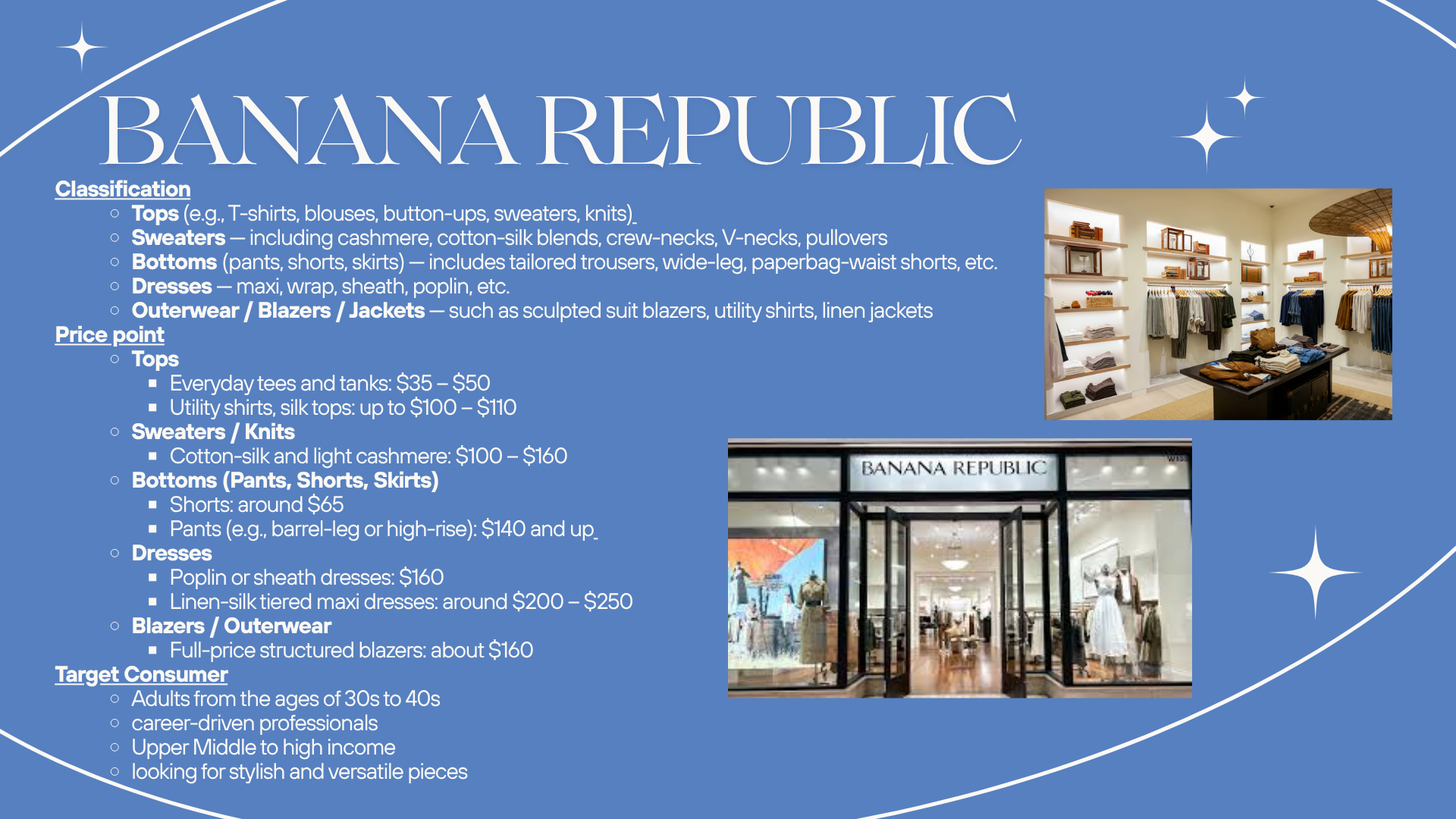
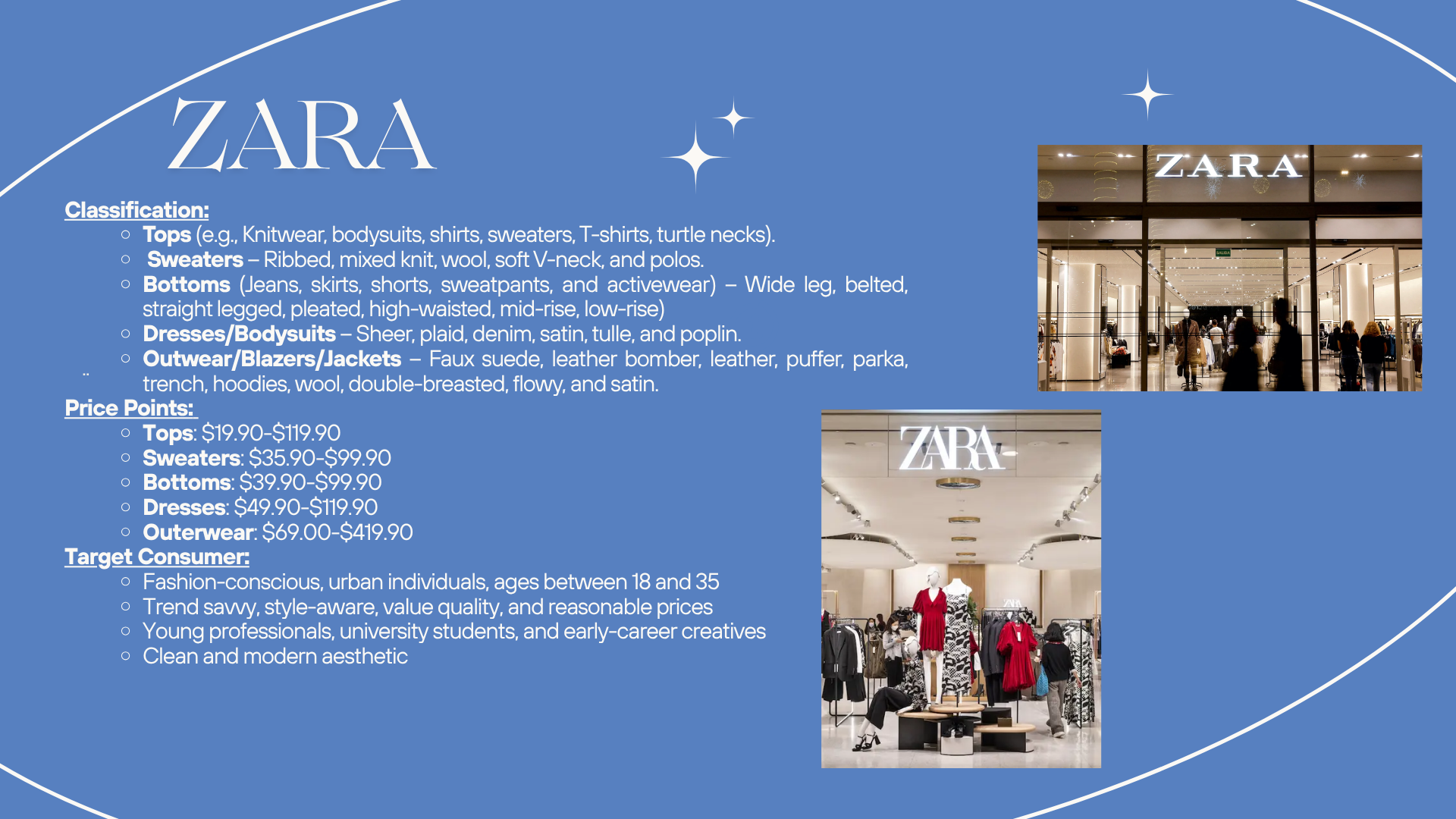
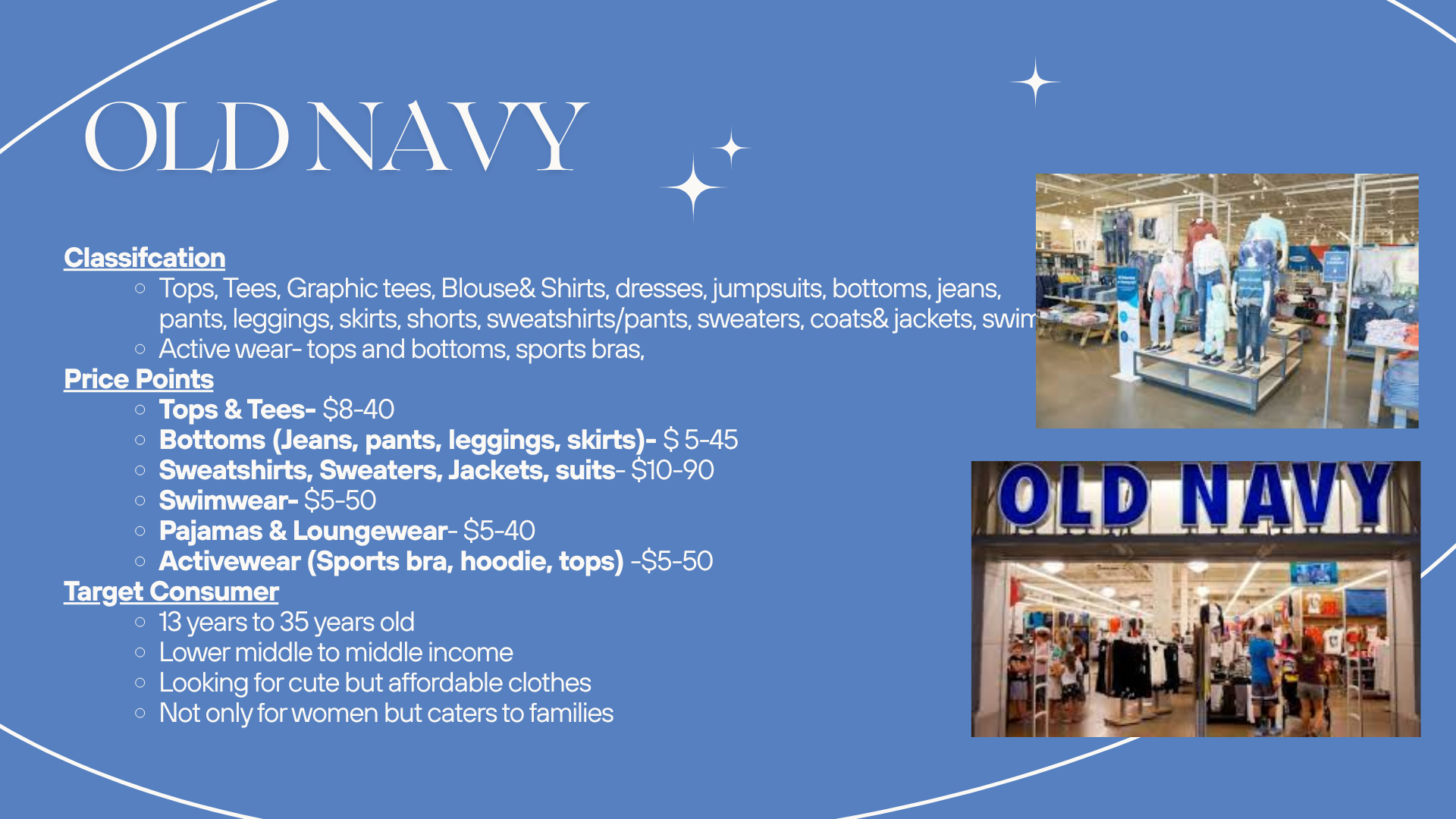
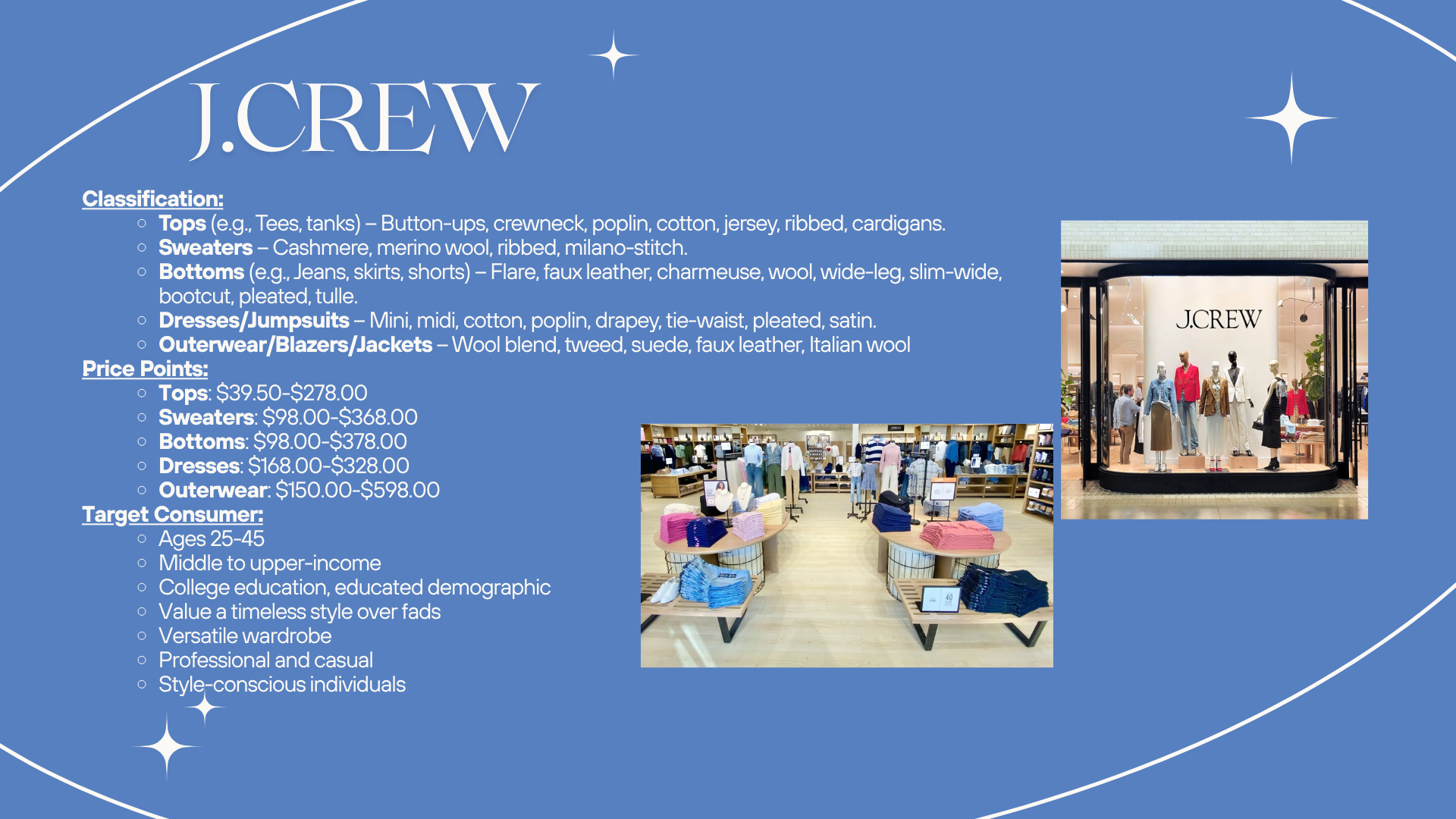
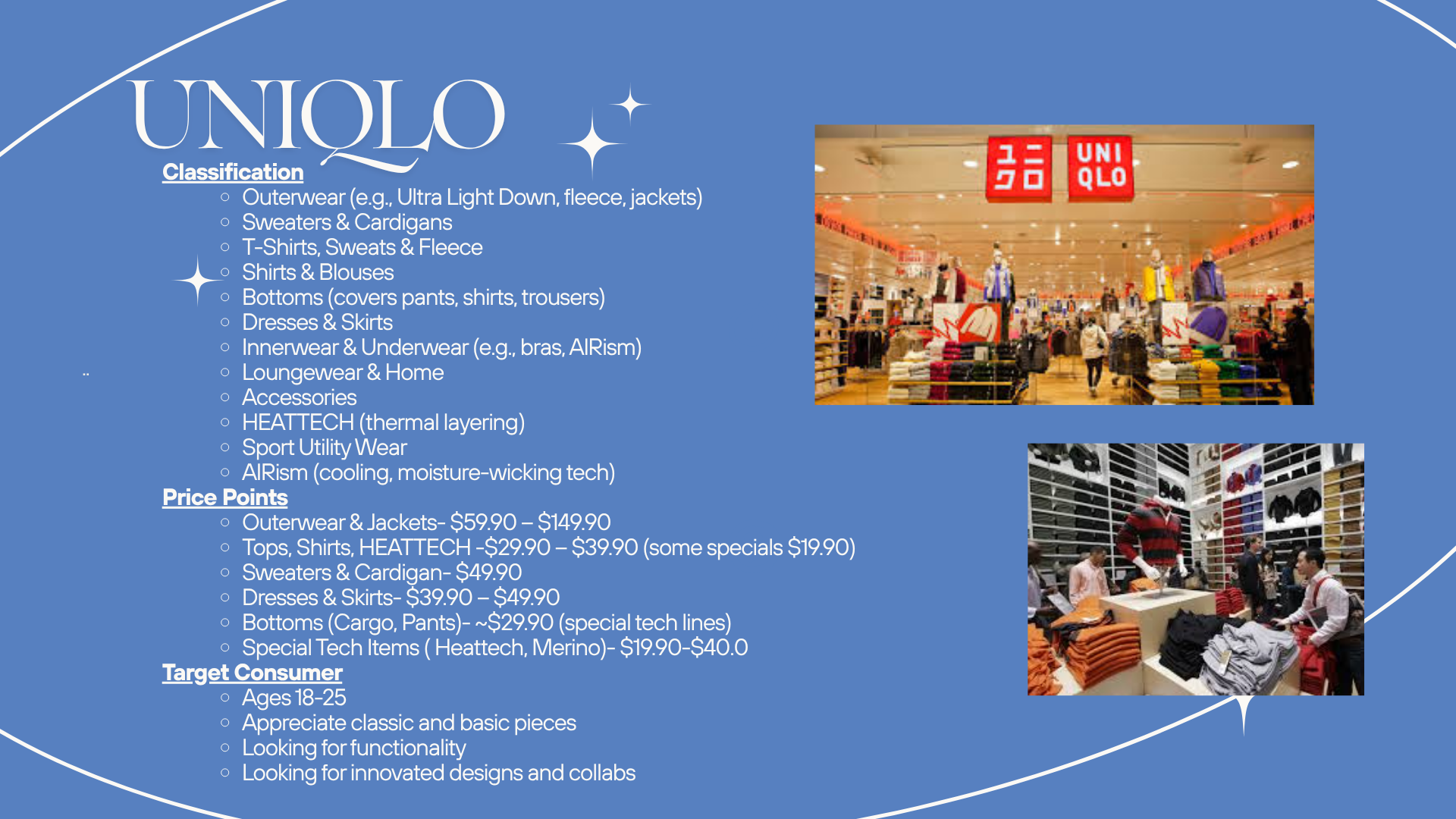
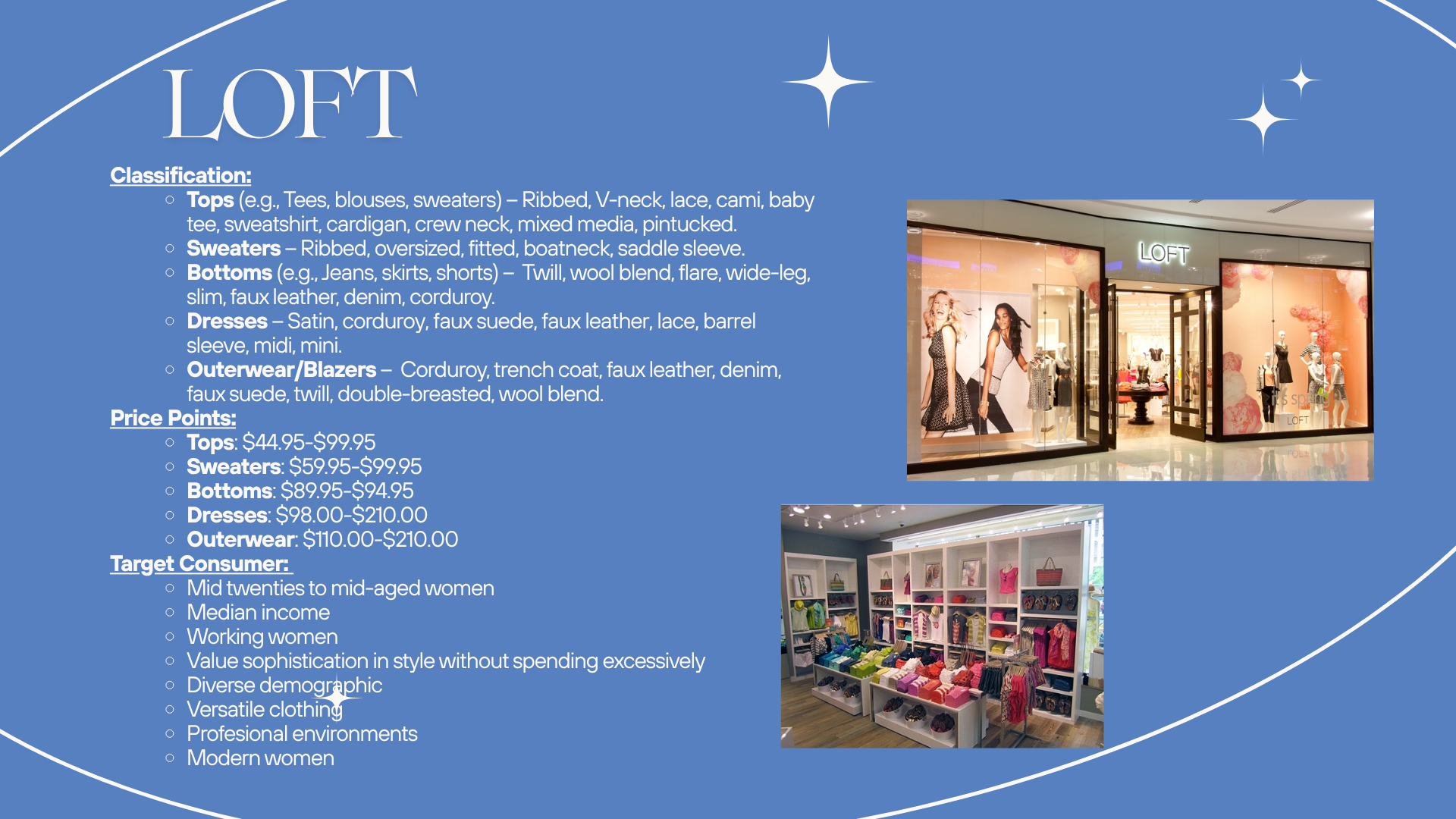
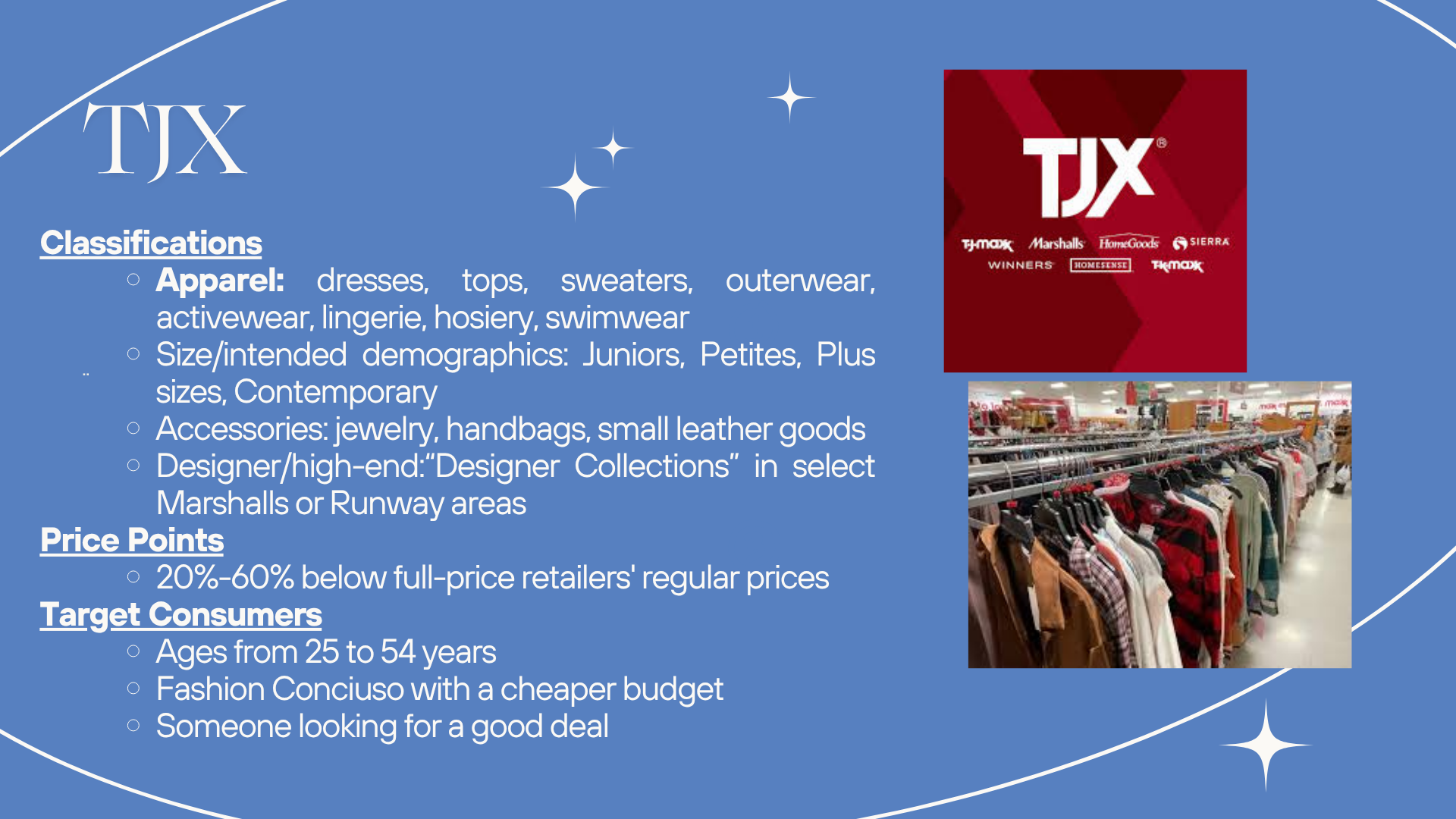
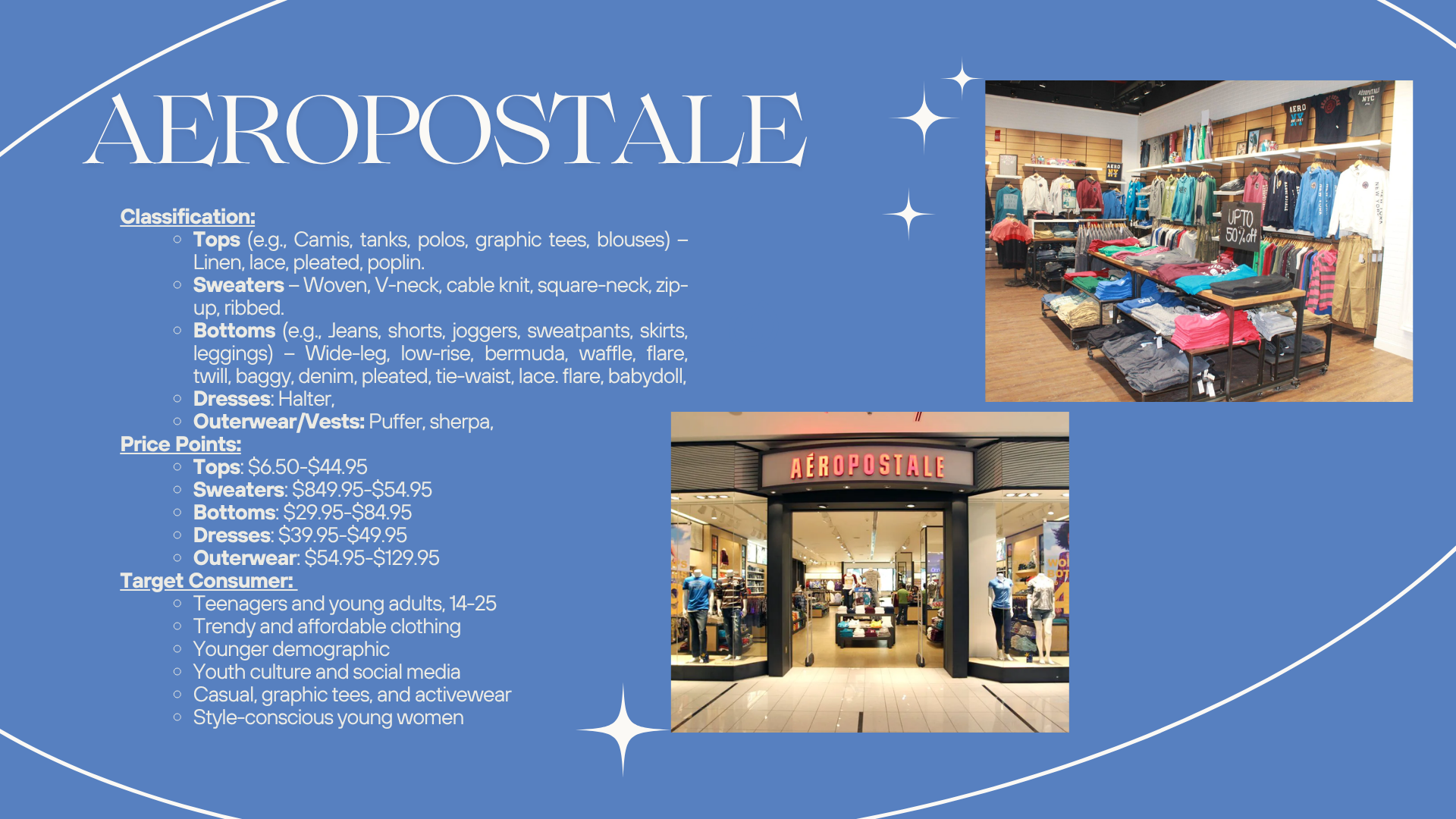
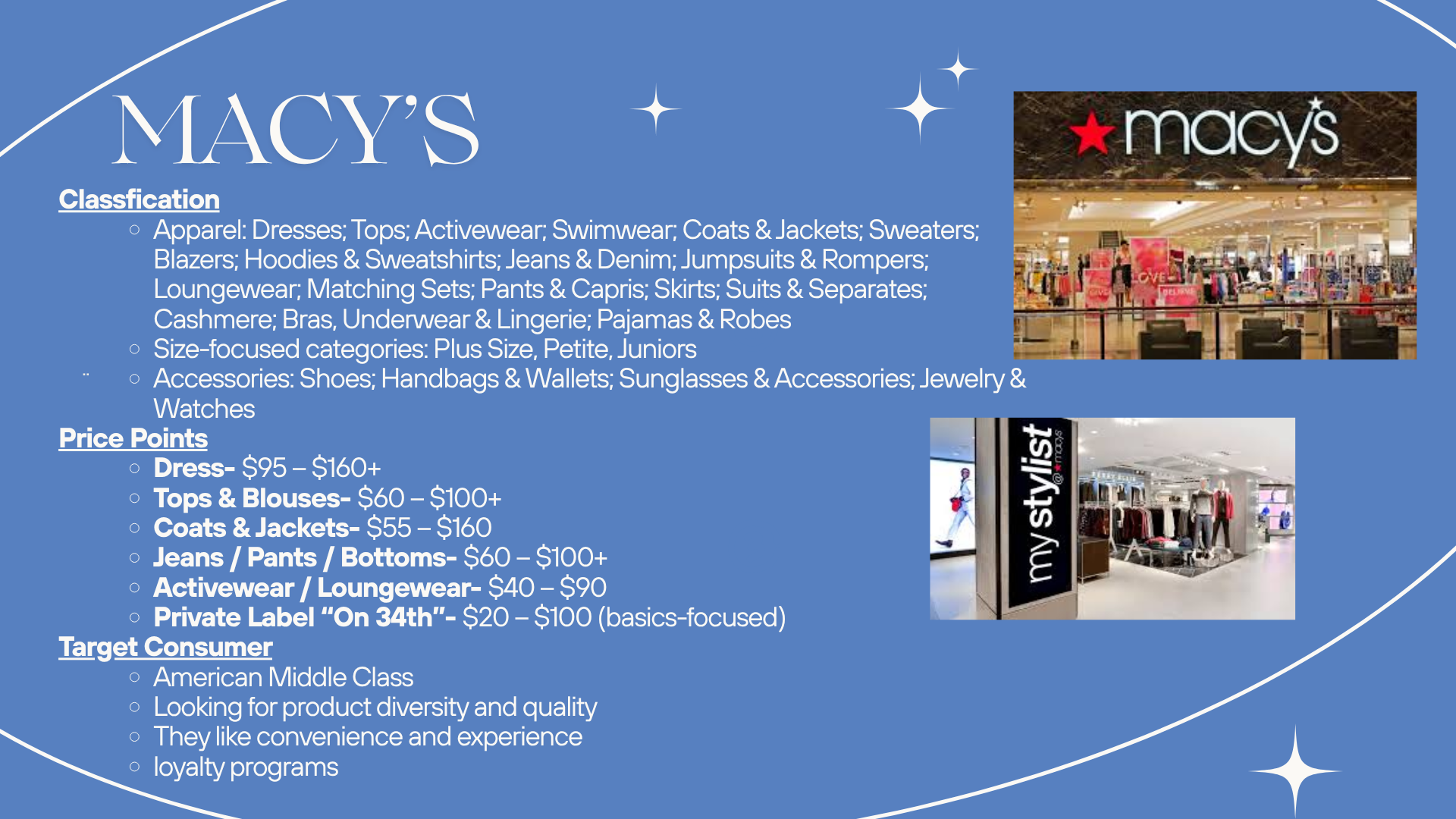
My team was chosen to research and identify 10+ relevant vendors/brands that align with a retailer competing with GAP. This helped when it came to creating our assortment plan. The most notable ones included American Eagle, Banana Republic, and Old Navy
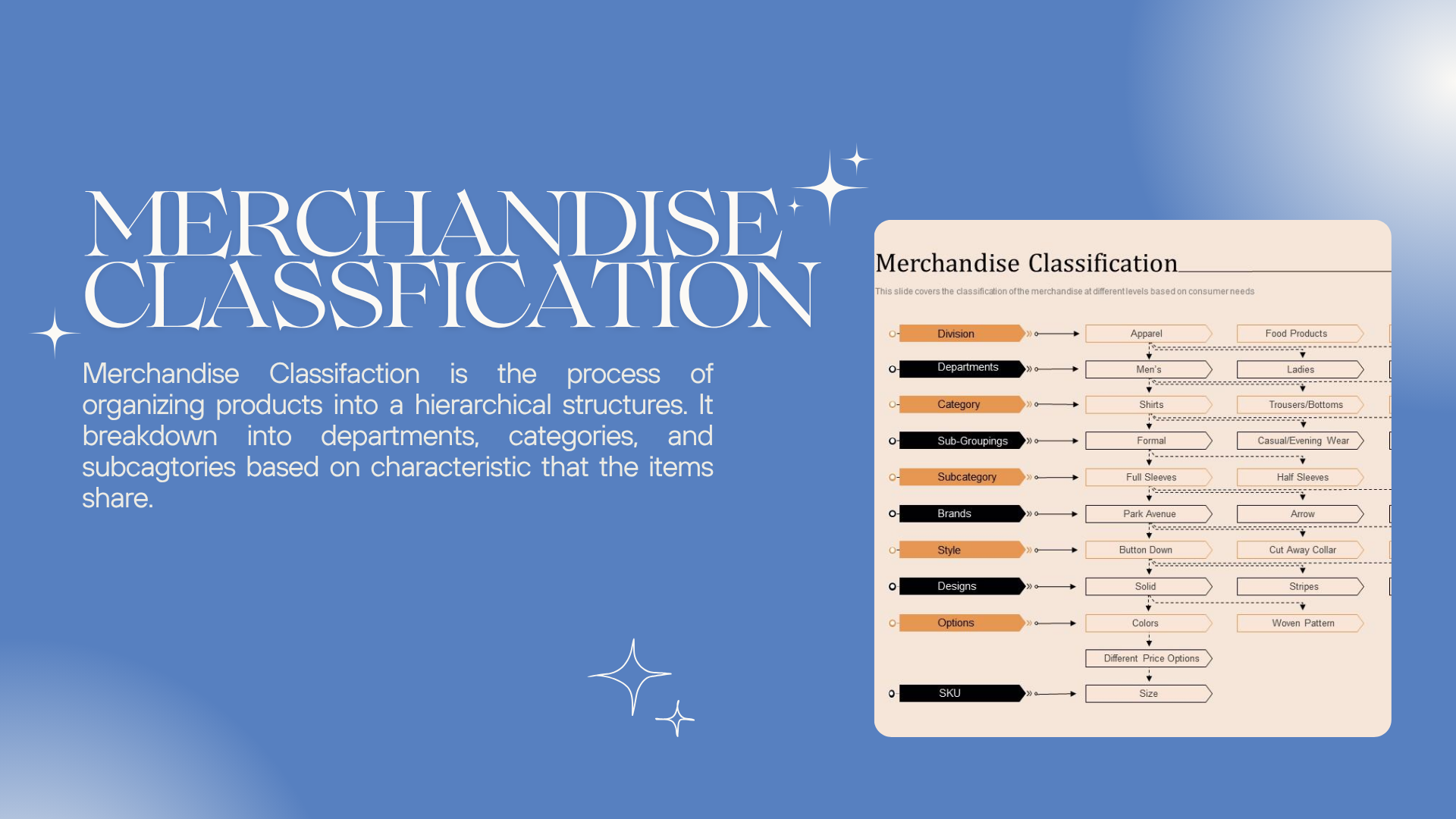
I also developed a detailed merchandise classification system within the women’s department, including:
Tops (knits, wovens, active tops)
Bottoms (denim, leggings, trousers)
Outerwear
Dresses
Accessories
Each classification was paired with realistic market price points, ensuring alignment with moderate retail positioning.
Process
P6-Month Sales Plan Development
Using historical sales data (LY), we projected Fall 2025 (TY) performance by:
Planning a 1–5% sales increase based on market conditions. My group chose a 3% increase to show confidence while taking some caution
Distributing sales across months (August–January)
Adjusting for seasonal trends and demand shifts. Took into consideration things like Back to School, Black Friday, and the Holiday Season.
We then calculated:
Stock-to-sales ratios (S/S)
Beginning of month inventory (BOM)
Average inventory & turnover (TO)
Markdown strategy (40–50% of sales)
This ensured a financially viable and balanced plan.
Process
Assortment Planning
We translated financial data into a merchandising assortment plan, including:
Sales by classification
Purchases by classification
Price point strategy (key price tiers + unit allocation).
This step connected numbers to actual product decisions, simulating real-world retail buying.

Skills
Retail math & Financial Planning
Competitive analysis
Merchandising & Assortment Planning
Excel
Strategic Thinking & Problem Solving
Collaboration
Key Takeaways
This project strengthened my ability to connect data-driven decisions with merchandising strategy. I developed a deeper understanding of how retailers balance sales forecasting, inventory management, and consumer demand to drive profitability.
A key takeaway was learning how small adjustments in sales projections, pricing, or inventory levels can significantly impact overall business performance.
I also gained experience working collaboratively on a large-scale project, refining both my analytical and communication skills.